
What Are LED Display Modules?
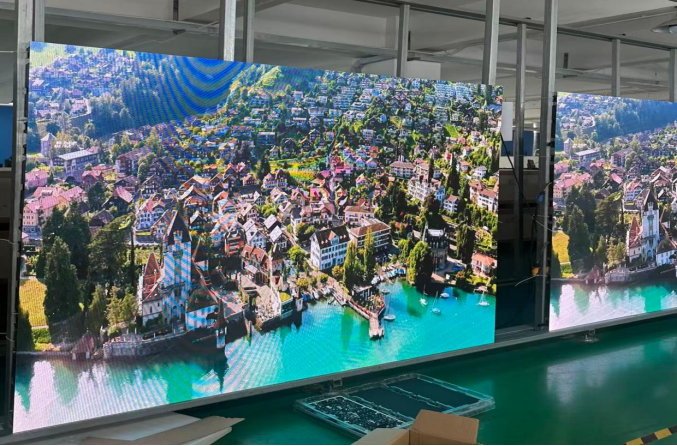
LED display modules are the fundamental building blocks of every LED video wall, digital billboard, and large-scale display screen. Each module is a self-contained unit that houses hundreds or even thousands of individual LED pixels arranged in a precise matrix or grid layout. When seamlessly connected together, these modules form a cohesive, high-resolution display capable of delivering stunning visuals.

How LED Display Modules Work
At the heart of every LED module lies a sophisticated combination of components working in harmony. Each pixel consists of Red, Green, and Blue (RGB) LEDs that blend together to produce over 16 million colors. The module operates through a Printed Circuit Board (PCB) that carries the LED lamps, driver ICs that regulate current and brightness, and control circuits that receive and process video signals.
The driver ICs use Pulse Width Modulation (PWM) to control each LED’s brightness with exceptional precision, enabling smooth color transitions and high grayscale performance. Modules are connected in a daisy-chain configuration, allowing signals to flow seamlessly from one unit to the next, creating a unified display without visible gaps.
Types of LED Display Modules
SMD (Surface-Mounted Device) modules are the most common type today, offering superior color uniformity, wide viewing angles, and support for ultra-fine pixel pitches. They are suitable for both indoor and outdoor applications.
COB (Chip on Board) technology mounts LED chips directly onto the PCB, achieving ultra-fine pixel pitches below P0.4 with superior heat dissipation and durability. These are increasingly popular for high-end indoor applications.
GOB (Glue On Board)– A transparent glue layer is applied over the LED surface, providing IP65 waterproofing, dust resistance, and impact protection. It also reduces glare and enhances contrast. GOB modules are widely used in rental stages, concerts, and outdoor events where frequent handling and harsh weather are common.
Flexible and Transparent modules offer creative possibilities for curved installations, glass facades, and architectural displays.
The Aging Test of Pre-Shipment
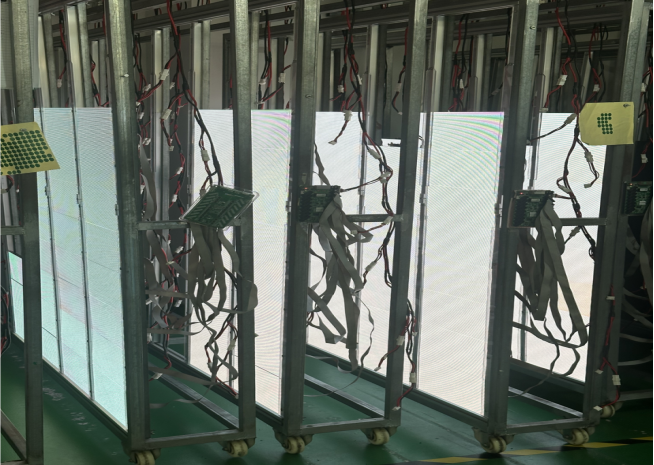
Before shipment, every high-quality module undergoes a rigorous aging test– running continuously at full brightness, cycling through colors and gray scales, often at elevated temperatures, for 48 hours. This process burns in the LEDs and drivers, identifying premature failures like dead pixels, color shifting, or IC instability. It ensures that only stable, “broken-in” modules reach your site, drastically reducing on-site failure rates and maintenance calls. Always ask your supplier about their aging procedures – it’s a mark of reliable quality.
Looking for the right LED display modules for your next project? Contact our team for expert guidance and customized solutions tailored to your specific needs.