
With the rapid development of technology, transparent LED displays have attracted much attention since their inception, and are expected to lead the next development trend of the LED display industry. However, how should we choose a transparent LED display, and how should we judge its quality? Today, Tenled will analyze how to choose a transparent LED display.
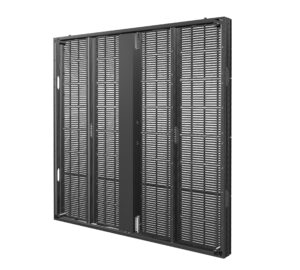
How to Distinguish Between High-Quality and Low-Quality Transparent LED Displays: Consider the Transparency of the Transparent LED Display
The transparency of a transparent LED display is closely related to the pixel pitch and manufacturing process. The pixel pitch is determined by project requirements. The larger the pixel pitch, the stronger the penetration, and vice versa. The manufacturing process depends on the technical level of the transparent LED display manufacturer, which directly leads to product differences. Tenled’s technology is at the forefront of the industry, capable of producing screens of various irregular shapes and supporting unequal-length screens without keel, with horizontal lengths up to 2 meters, significantly improving the transparency of transparent LED displays.
How to Distinguish Between High-Quality and Low-Quality LED Transparent Screens: Consider LED Brightness and Viewing Angle
Indoor LED brightness should be maintained at 800-900 cd/m², while outdoor brightness must exceed 1400 cd/m² to ensure clear image display. If these standards are not met, the displayed image will be illegible due to insufficient brightness. Viewing angle refers to the range of the display screen that multiple viewers can see; therefore, a wider viewing angle is better. Viewing angle depends on the chip packaging method, so it must be considered during chip packaging. Tenled transparent LED displays have a 165° viewing angle, can be adjusted for installation according to site conditions, and can achieve a maximum brightness of 4000 cd/m², maintaining a clear image even under direct sunlight.
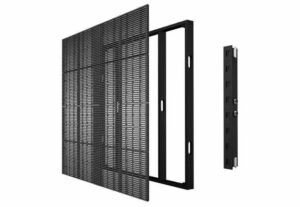
How to Distinguish Between High-Quality and Low-Quality LED Transparent Screens: Dead Zones and Embedded Phenomena
Dead zones refer to single points on the display screen that are always bright or always dark. Dead zones are caused by mold quality issues. Embedded phenomena refer to small squares or areas that are always black on the display screen, indicating module failure. The main cause of this phenomenon is poor quality connectors used in the display screen. Tenled positions itself as a high-end brand, and all raw materials undergo rigorous inspection to eliminate any problems.
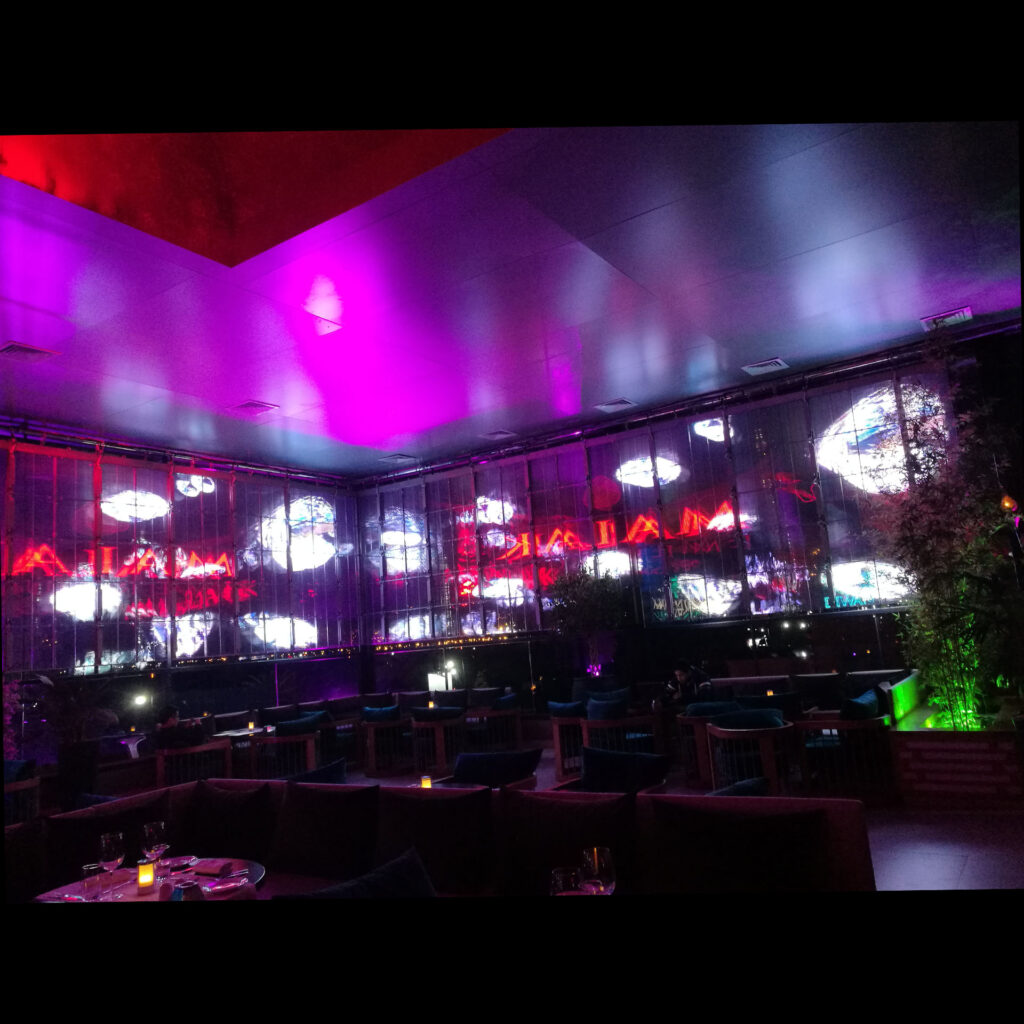
How to distinguish between high-quality and low-quality LED transparent screens: The flatness of the display screen and the presence of color blocks.
Since the flatness of the display surface directly affects the screen texture effect and the distortion of the displayed image, extra care must be taken when adjusting the flatness. Color blocks refer to color differences between adjacent modules. This phenomenon is mainly caused by poor control system quality, low grayscale, and low scanning frequency. Tenled uses a point-by-point calibration method, acquiring the brightness (and chromaticity) data of each LED on the display screen to obtain the correction coefficients for each LED point (i.e., the coefficient matrix for each pixel). This information is fed back to the display’s control system, which applies the correction coefficients to achieve point-to-point differential driving, thereby greatly improving the pixel brightness and color uniformity of the display.