
In recent years, LED fans have become a common sight in large shopping malls and events. Resembling traditional fans, they rotate to display various patterns, some even displaying dynamic 3D images. These are incredibly cool and always attract attention, serving as excellent advertising and promotional tools.
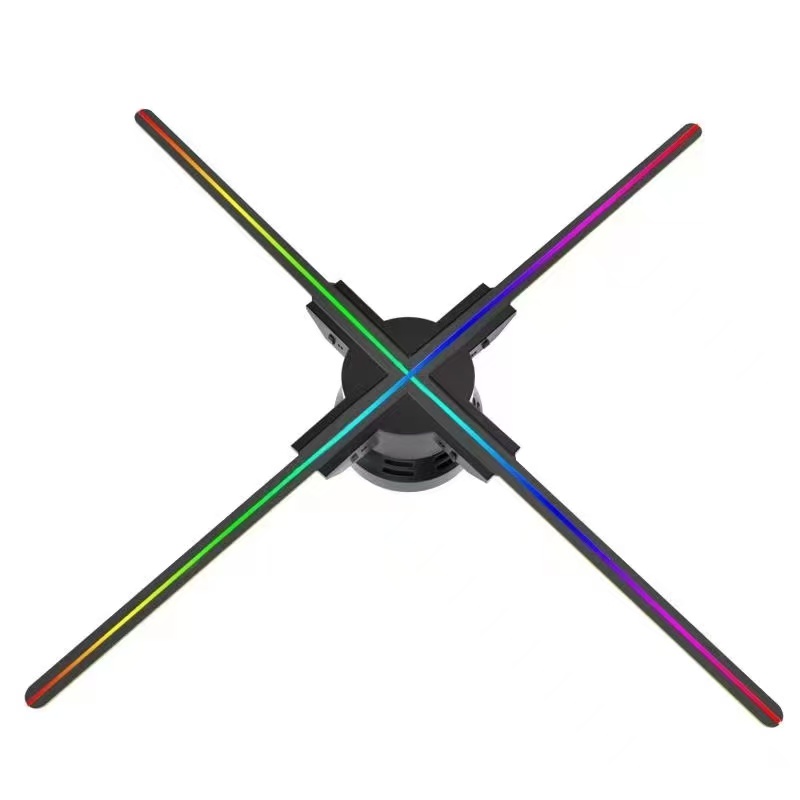
Alternative Names for 3D Fan Screens
3D fan screens are also known as 3D holographic advertising machines, holographic fans, 3D fans, etc. Their scientific name is: 3D holographic intelligent display screen.
3D Fan Screen Imaging Principle
The imaging principle of 3D fan screens is commonly referred to as “POV” (Persistence of Vision) display technology. The rotating display crystals continuously change shape, utilizing the principle of visual persistence to form a complete and continuous image, achieving a 3D holographic imaging effect.
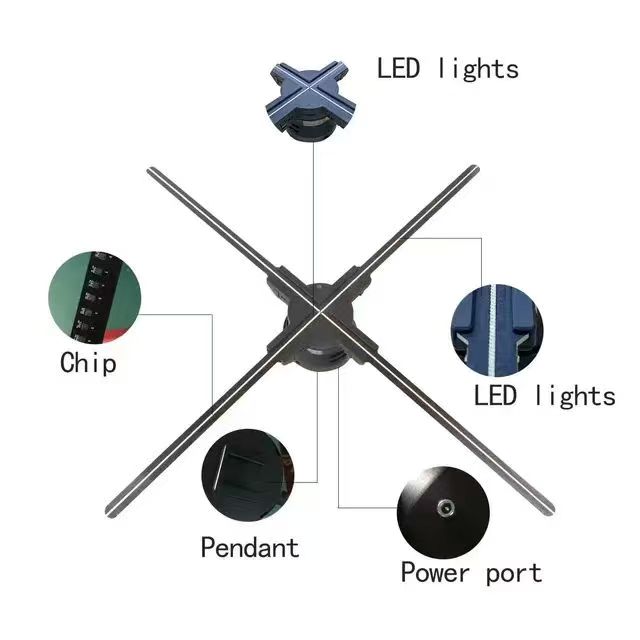
Persistence of Vision
Persistence of vision refers to the phenomenon where, when the human eye observes an object, the light signal transmitted to the brain takes a short time to disappear. This lingering visual image is called an “afterimage,” and the phenomenon is known as “persistence of vision.” Movies utilize this persistence of vision to rapidly transform static scenes into moving images.
When an object is moving rapidly, even after the image disappears, the human eye can retain it for about 0.1 to 0.4 seconds. This lingering “afterimage” is called “persistence of vision.”
3D Effects
The naked-eye 3D fan screen utilizes this principle, providing a 3D effect without the need for special glasses. It’s small, low-power, and incredibly eye-catching! One-click transfer via a mobile app makes it convenient and fast, creating the coolest visual effects!
3D Effects Content Requirements for Playback
Since the area reached by the light strip is only a circle, the content to be played also needs to be positioned within this circular display area. Similar to LED transparent screen content, when creating images and videos, it’s necessary to consider both the product’s resolution (ideally 1024*1024 pixels for higher definition) and a black background for better display.
Content Formats for Playback
Image formats supported: jpg, png, ipeg;Video formats supported: mp4, avi, 3gp, wmv, mov, flv (mp4 recommended).
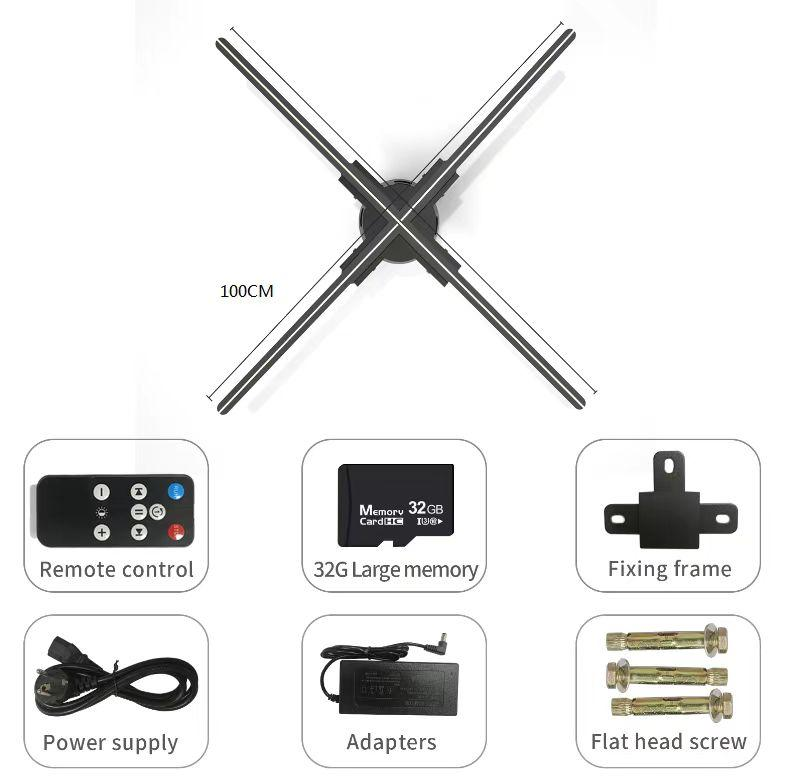
Currently, the main application of 3D smart screens is advertising. However, due to their editability and realistic display effects, they are expected to be applied in many more fields in the near future.